Showing posts with label hystero salpingo sonography. Show all posts

Friday, December 21, 2018

Pelvic Floor Weakness


Pelvic floor laxity occurs when the pelvic floor muscles, supporting tissue and ligaments stretch and weaken and no longer provide adequate support to hold the pelvic organs in place, in particular in certain physical exercises. Pelvic floor weakness can affect women of any age. But it often affects women who've had one or more vaginal deliveries.

Possible symptoms of pelvic floor weakness include

  • Sensation of something pulling down in your lower abdomen
  • Urinary problems, such as accidental urine leakage in coughing, sneezing or laughing
  • Voiding difficulties with retention of residual urine after micturition or post-micturation dribble
  • Overactive bladder symptoms with a strong urge to go
  • Increased number of trips to the bathroom and voiding at night (nocturia)
  • Problems to empty the bladder in one go or interrupted flow (staccato-voiding)
  • Constipation and trouble having a bowel movements
Some of the most common reasons for weakened pelvic muscles and tissues include:  
  • Pregnancy and childbirth
  • Prolonged labour and birth trauma
  • Tearing in childbirth
  • Previous history of pelvic surgeries
  • Delivery of a large baby or twins
  • Obesity and a high BMI
  • Chronic increase of intra-abdominal pressure by repeated heavy lifting, asthma or chronic coughing, severe obstipation with trouble having bowel movements


Simple ways to strengthen the pelvic floor:

Exercise regularly and target the pelvic floor muscles. You can try Yoga, Pilates, swimming and targeted physiotherapy focusing on these muscles, especially after you had a baby. Physiotherapy of the pelvic floor can help to correct posture, stretch & relax tight muscles and strengthen weaker muscle groups. It can help increase endurance, fine coordination and tones of the muscles for better bladder control, tightening and lifting of the pelvic floor. Pelvic floor physiotherapy can include biofeedback, kegel exercises, electrical stimulation and bladder education - just as needed.

Try to prevent from constipation by drinking plenty of fluids and eat a healthy diet with high-fiber foods to maintain bowel movements. Eat between 35 – 55 grams a day. You can get them through your vegetables, grains like white rice, or brown rice, or wild rice. And clean your ecosystem with
natural probiotics. Examples of foods that act as prebiotics are leeks, asparagus, beans, legumes, banana, garlic, sweet potatoes, squash, and onion. You don’t need all of these every day. Just rotate through a wide diversity of vegetables, legumes and some fruits.

Avoid heavy lifting and when lifting, use your legs instead of your waist or back.

Control coughing, get treatment for a chronic cough or bronchitis, reduce exposure to allergens, dust and quit smoking. An air purifier in your bedroom can help with better sleep at night without coughing and helps regulate air humidity.

Find out your ideal and implement weight-loss strategies

To find out what will work best for you, visit us and get a pelvic examination including dynamic pelvic ultrasound.


Dr. Amelie Hofmann-Werther


Specialist in Obstetrics & Gynaecology
(Facharzt Germany)
Cervical Dysplasia & Coloscopy


Master Class in Fetal Medicine  


Thursday, October 25, 2018

Palpable Breast Findings


Palpable Breast Findings

Newly recognized lumps and nodules in the breast are a reasonable cause for many women to be highly alerted. Self-detected, when showering or applying body lotion, lumps and nodules, as well as painful swellings in the breast give rise to concerns, especially when being abroad, not in your home town community and not knowing where to address your concerns to…
Good to know, that in fact most of the findings in women’s breast are of benign, meaning non-malignant, non-cancer origin. They may show up according to menstrual cycle, predominantly prior to onset of menstrual bleeding, while bleeding or mid-cycle near ovulation time.
All of a sudden, bra holders put pressure to your chest and sleeping on your belly is uncomfortable…

Now, Rule No.1 is applying: Keep calm!
What’s common, is common! And what’s rare, is rare!

And  90 % of all detected breast findings are benign, meaning non cancerous.
Nevertheless, uncertain suspicious findings all need to be thoroughly looked at.
The most common findings in a women’s breast are listed below as a brief overview

      Structural changes of breast tissue density = Mastopathia
      Pain & Tenderness = Mastalgia
      Rtention of fluid = Cyste
      Changes in duct system & glands = Papilloma
      Benign solid nodule = Fibroma
      Acute infammation = Mastitis

Mastopathia
This term refers to benign, meaning non-malignant structural changes in the breast tissue, that is composed of glandular tissue, fatty tissue and fibroid tissue. Changes are due to hormone imbalance. Cysts and lumpy glandular areas may occur, combined with feeling of tension and tenderness of the breast.

Mastalgia
Pain and tenderness mostly enhanced in the second half of menstrual cycle close to bleeding time. The breasts may feel heavy, sensible, tense and firm or lumpy. Since the breast tissue reacts very sensible to hormonal changes, complaints occur more often in irregular cycles and in women with bleeding disorders.

Cysts
cyst is a non-malignant fluid filled dilated area of a glandular duct in the breast. It is an important entity since it can cause irritating focal pain and discomfort or cause anxiety when being palpated by a woman herself as a suspicious nodule. To detect a cyst in the breast, an ultrasound examination is the assessment of first choice.

Fibroadenoma
A fibroadenoma is the most common finding amongst benign nodules in the breast. It most commonly affects young women as a solitary finding. Only 7% of patients present several fibromas. Typical criteria in ultrasound is their round to oval shape with smooth surface and clear margins. The fibroadenoma is a benign solid mass that only in very rare cases (0,1 – 0,3 %) may include cancer precursor cells (Carcinoma in situ).

Papilloma
A rather rare entity with 1 - 1,5% of all findings that is located intra-ductal.80% of all Papilloma show secretion of fluid from the nipple. In case of blood stained secretion, further investigations need to be performed by a radiologist using contrast to visualize a glandular duct extension in the breast.

Abscess & Mastitis
An acute inflammation of the breast most commonly is seen in breast feeding women consulting a doctor due to acute pain, swelling, rash and maybe fever. In the the lactating breast, inflammation occurs as a result of bacteria invasion. Tiny scars in the sore nipple area allow bacteria to affect underlaying tissue and cause infection spreading along the lactation ducts of the breast.

Please note:
In case of a positive family history regarding malignant cancerous or pre-cancerous diseases in close relatives, normal check up visits with your doctor should be adjusted in frequency and intensity.

Screening-Guidelines for breast ultrasound and Mammogram for patient without pre-dispositioning high risk constellation recommend examination of the breast starting with the age of 40 and above.


Dr. Amelie Hofmann-Werther


Specialist in Obstetrics & Gynaecology
(Facharzt Germany)
Cervical Dysplasia & Coloscopy

Master Class in Fetal Medicine                             

Sunday, October 14, 2018

Polycystic Ovarian Syndrome (PCOS): A lifestyle-related Problem?


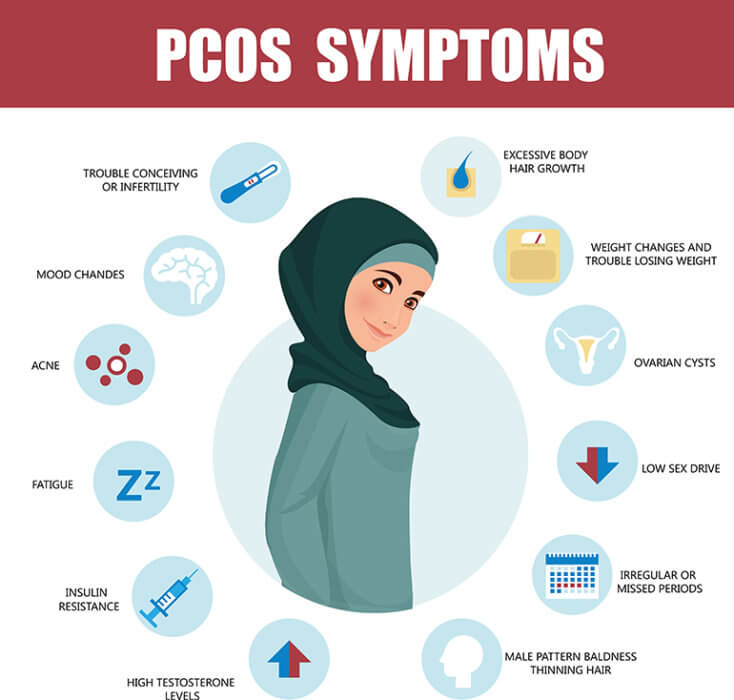
Polycystic Ovarian Syndrome (PCOS) is one of the most common female endocrine disorders in the Middle East. PCOS is a heterogeneous combination of signs and symptoms of impaired glucose-insulin-homeostasis, androgen excess, and ovarian dysfunction due to epigenetic and environmental influences, including diet, and lifestyle factors.
“Is your lifestyle making you infertile?” is an often raised question[1] linking PCOS to insulin resistance and diabetes, a lifestyle condition the Middle East suffers from in almost epidemic proportions. The relationship between PCOS and insulin resistance seems obvious in the UAE where one in five of the female population suffer from type 2 diabetes and other metabolic syndromes. The prevalence of PCOS has been investigated in many studies in many continents. A particularly high incidence of PCOS in the Middle East/GCC with approximately 20-25% of women may be due to hereditary and ethnic influences as well as due to certain lifestyle related conditions. Some researches assume that cases can reach up to 30% or even higher in the sub fertile population group in the region[2].

Polycystic Ovarian Syndrome
A systematic review and meta-analysis on the prevalence of PCOS in reproductive-aged women of different ethnicity, published by NCBI in 2017[3], conducted searches in PubMed, The Cochrane Library, EMBASE, CINAHL up to January 2017. The results suggested the lowest prevalence in Chinese women (2003 Rotterdam criterion: 5.6% 95% interval: 4.4–7.3%), and then in an ascending order for  Caucasians  (1990 NIH criterion: 5.5% 95% interval: 4.8–6.3%), Middle Eastern (1990 NIH 6.1% 95% interval: 5.3–7.1%; 2003 Rotterdam 16.0% 95% interval: 13.8–18.6%; 2006 AES 12.6% 95% interval: 11.3–14.2%), and black women (1990 NIH: 6.1% 95% interval: 5.3–7.1%). The results from the above analysis have suggested that, – using the same diagnostic standards -, Chinese women would have the lowest risks of developing PCOS, and then in an ascending order, followed by Caucasian women and women residing in the Middle East, with black women having the highest risk of developing this syndrome. Considering the wide variation in the clinical presentations associated with PCOS among distinct ethnicity, the study postulates a need for the establishment of ethnicity-specific guidelines for this condition. This may help to prevent the under- or over-diagnosis of PCOS.

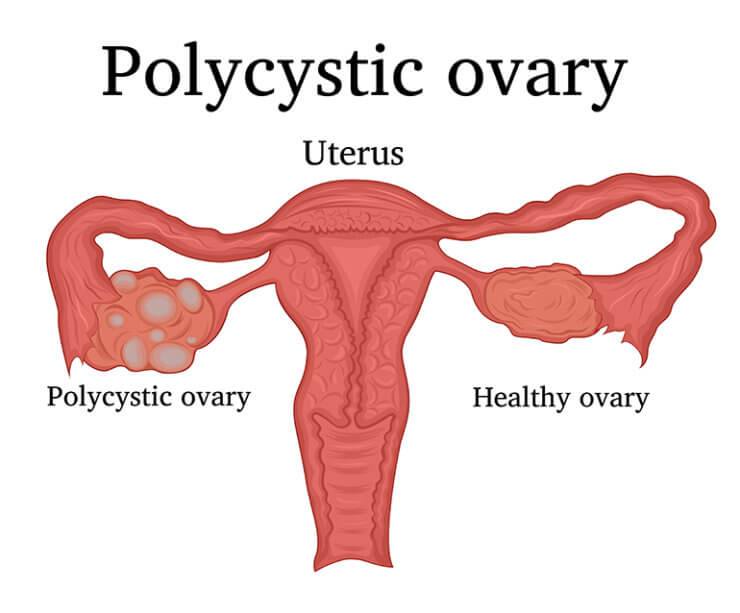
In daily clinical practice as a gynecologist in Dubai, I see a lot of women affected by PCOS-associated conditions. Some women present with irregular periods, bloated intestines, weight-gain, retention of water, hair loss, or skin problems with increased androgen levels causing hirsutism and acne. Other women are being picked up because they are facing problems to conceive and seek advice for conception counselling in subfertility. Some women are not at all aware of any hormone imbalance and never wondered, how come they have skin pigmentation disorders such as acanthosis nigricans, i.e. dark coloured skin patches related to insulin resistance. Overweight and obesity affects a lot of women with PCOS and they do present a higher prevalence of both impaired glucose tolerance and type 2 diabetes. But also, the normal weight women affected by PCOS do have an underlying insulin resistance in over 60%, an impaired glucose tolerance in over 40% and 10% a predisposition to develop type 2 diabetes in over 10% of the cases. The underlying pathophysiology of PCOS is a divine blend of hyperandrogenism, insulin resistance and other factors causing follicular arrest. Multiple immature antral follicles seen in the transvaginal ultrasound imaging can be observed. The follicular arrest maturation arrest contributes to anovulatory cycles and hence causes irregular menstruations and fertility problems.

What is Polycystic Ovarian Syndrome (PCOS)
Depending on the individual complaints presented by a woman a wide range of investigations can be offered to evaluate extend and degree of hormonal imbalance, including laboratory tests and ultrasound examinations. Accordingly, depending on the wishes and needs of a patient, the reason for seeking advice is the key to the adequate case-to-case PCOS management. Does a woman wish to conceive and is struggling to fall pregnant? Is an adolescent woman suffering from acne and severe skin problems, but does not think of family planning yet? Is she struggling with weight control and irregular menstrual bleedings?

Lifestyle changes, including nutrition advice, carb-controlled diet, and physical exercise, are the first-line treatment options for adolescent girls and women with PCOS. Pharmacologic treatments including oral contraceptives, insulin sensitizers, prednisone, leuprolide, clomiphene, and spironolactone and others are options to be considered if lifestyle changes fail, which is rarely the case. Nutrients supply (diet) and nutrients utilization, metabolism and physical exercising remain crucial in the management of PCOS. Nutrition education can therefore not be overrated when looking at incidence figures of PCOS anywhere in the world.


Dr. Amelie Hofmann-Werther

Specialist in Obstetrics & Gynaecology
(Facharzt Germany)
Cervical Dysplasia & Coloscopy
Master Class in Fetal Medicine


http://www.fetalmedicine.ae/#dr-amelie

Friday, October 5, 2018

The 💯 Faces Of Endometriosis


What is Endometriosis?


The uterus has a thick muscular layer called the myometrium. It is responsible for contractions during childbirth and those wonderful menstrual cramps we all know. The inner lining layer of the uterus is called endometrium and is the ‘functional’ part. The endometrium grows and sheds with each menstrual cycle and is responsible for the bleeding: during the first half of the menstrual cycle it grows and then breaks down in the second half of the cycle and finally sheds off during menstruation. 

Endometriosis is defined as patches of endometrium-like tissue that is found outside the uterus. Endometriosis is responsive to hormones just like the normal endometrium, so throughout the menstrual cycle, endometriosis grows and bleeds, but unlike the normal endometrium, the blood has actually nowhere to go because its inside the pelvic cavity. Whether or not endometriosis does actually ‘bleed’ can vary but the pure presence of endometriotic lesions does lead to inflammation and pain, depending on the extent and location of endometriosis in the pelvis. More important as what endometriosis is, is what endometriosis is not! Endometriosis is not an infection of any kind, it’s not communicable, it’s not a cancer and is not fatal, however just because something is not fatal, doesn’t mean it can’t take your quality of life away. For sure endometriosis is a very complex condition that requires a holistic and personalized approach.

Some women with endometriosis have painful periods, some don’t. One woman may have severe pelvic pain, depression, anxiety and bowel pain, whereas another woman may have no pain or psychological symptoms, but is infertile due to endometriosis, these two cases would require very specific and
different approaches.

What are typical symptoms of endometriosis?


Everything, nothing and all things in between! Some women are only diagnosed when they are having an operation for another condition, or when there is an investigation for something linked to endometriosis like fertility issues.
For those experiencing symptoms, the most common one is pain, such as dysmenorrhoea which is defined as excessively painful periods that cause interference to the daily life and massively clouds the overall emotional well-being. If periods are causing someone to regularly miss school/work/social occasions because they are so painful, this is not ok and could very well be a sign of an underlying medical condition, like endometriosis.


Another of the common symptoms associated with endometriosis is chronic pelvic pain. Chronic pelvic pain can be continuous or intermittent and can be associated with a variety of factors, for example exercise, specific foods or certain activities, or it may just come on randomly. Painful sex (also known as dyspareunia) is one of the symptoms of endometriosis that doesn’t get much
attention since it is a very personal and private matter, which can understandably be difficult to talk about. Endometriosis symptoms vary from person in frequency and severity, including leg pain, bloating, painful urination, painful bowel movements, heavy menstrual bleeding, spotting in between periods and fatigue. A lot of sufferers want to rest and be left alone.The pain takes so much out of them, sometimes taking a nap feels like the only option to escape. Trying to summon enough energy to continue with the day but for at least the first three or four days of period, they just want to sleep a lot.

Which types of endometriosis do we know?


Endometriosis is usually categorized into stages (minimal, mild, moderate and severe) which depend on type, extent and location of the disease. The stage of disease does in no way correlate with the symptoms experienced, so a woman with severe disease can have no symptoms and a women with minimal disease can have debilitating symptoms and vice versa. Superficial endometriosis are lesions that can be found anywhere around the pelvic area, most frequently found on the surface of organs/ligaments/structures of the pelvis and can be as small as to be almost invisible to the naked eye, or about as large as a pea and any size in between. They often show scarry tissue associated with them which can pull or restrict the surrounding tissue leading to pain such as pain in emptying the bladder or in bowel movements, intercourse or sports.


Another entity type are endometriotic cysts. Most commonly found on the ovaries, these endometriosis cysts are filled with old blood that takes on a brown color, giving them the undeservedly pleasant name ‘chocolate cysts’. Endometriosis cysts can grow to be quite large, ranging from a few centimeters
to massive cysts in very rare cases.

The third type is called deeply infiltrating endometriosis (DIE). As the name suggests these lesions actually penetrate deep into the tissue of the pelvis and are known to cause the more severe symptoms associated with endometriosis.

Who can get endometriosis?


We do know that endometriosis affects more then 1 in 10 women of reproductive age, but endometriosis can affect anyone, of any age and of any race/socioeconomic background. Women with a family history of endometriosis are more likely. Still, because of a lack of awareness and education about endometriosis, the majority of sufferers remain not diagnosed.

What are treatment options?


Endometriosis is not a uniform disease so there are many treatment options pathways open for women with endometriosis and it is often quite a minefield of trial and error to find the right one for each woman. Endometriosis for sure requires a holistic approach to therapy that considers all aspects and impact the disease has on a person’s life.

There are several types of hormonal medication that women with endometriosis may be offered, the most common ones are: Birth control pills (BCPs), Progestin only pills (POPs), Gonadotrophin releasing hormone analogues (GnRHa), Aromatase inhibitors, complimentary therapies and surgical treatment options.I can’t emphasize enough the importance of education in endometriosis in order to find the best treatment for every single affected women.


Dr. Amelie Hofmann-Werther

Specialist in Obstetrics & Gynaecology
(Facharzt Germany)
Cervical Dysplasia & Coloscopy
Master Class in Fetal Medicine


http://www.fetalmedicine.ae/#dr-amelie

Monday, May 7, 2018

What is Tubal Patency Check (Hystero Salpingo Sonography)?

Females have a pair of fine fallopian tubes which eggs travel form the ovaries to the uterus.  To obtain a successful pregnancy, one has to have an "open" or "patent" tubes.  Women who are trying to get pregnant, but are having difficulty conceiving should get an appointment for tubal assessment.  Normal fallopian tubes cannot be seen by a regular ultrasound, hence, contrast is used. 


Tubal patency check is performed during the first half of cycle before ovulation which  means between day 8-12 of that cycle.   This test is done before ovulation to make sure there is no pregnancy even if the chance of being pregnant is low.

The pain that may be experienced varies from women to women.  Some would say they did not feel any pain at all or some would complain of cramping when the contrast is injected.  It would be safe to say that majority of women feel mild to moderate pain during the procedure.  It could be recommended that pain reliever tablets be taken an hour before the procedure.

A pelvic ultrasound is performed to assess the pelvic anatomy.  If the findings are normal then tubal assessment will proceed.   There is a special catheter  inserted through the cervix and this is where the contrast is injected while the vaginal probe is also inserted.  If the contrast is seen flowing through the fallopian tubes towards the ovary on both sides, it means that the tubes are patent.  However, if the results show that the tubes are blocked, the Physician would discuss further assessment.  It is best to always ask questions and be informed.


Dr. Afshin PourMirza, MD, PhD
Medical Director
Obstetrics & Gynaecology
Feto Maternal Medicine Specialist
www.fetalmedicine.ae