Showing posts with label viability scan. Show all posts

Sunday, October 14, 2018

Polycystic Ovarian Syndrome (PCOS): A lifestyle-related Problem?


Polycystic Ovarian Syndrome (PCOS) is one of the most common female endocrine disorders in the Middle East. PCOS is a heterogeneous combination of signs and symptoms of impaired glucose-insulin-homeostasis, androgen excess, and ovarian dysfunction due to epigenetic and environmental influences, including diet, and lifestyle factors.
“Is your lifestyle making you infertile?” is an often raised question[1] linking PCOS to insulin resistance and diabetes, a lifestyle condition the Middle East suffers from in almost epidemic proportions. The relationship between PCOS and insulin resistance seems obvious in the UAE where one in five of the female population suffer from type 2 diabetes and other metabolic syndromes. The prevalence of PCOS has been investigated in many studies in many continents. A particularly high incidence of PCOS in the Middle East/GCC with approximately 20-25% of women may be due to hereditary and ethnic influences as well as due to certain lifestyle related conditions. Some researches assume that cases can reach up to 30% or even higher in the sub fertile population group in the region[2].
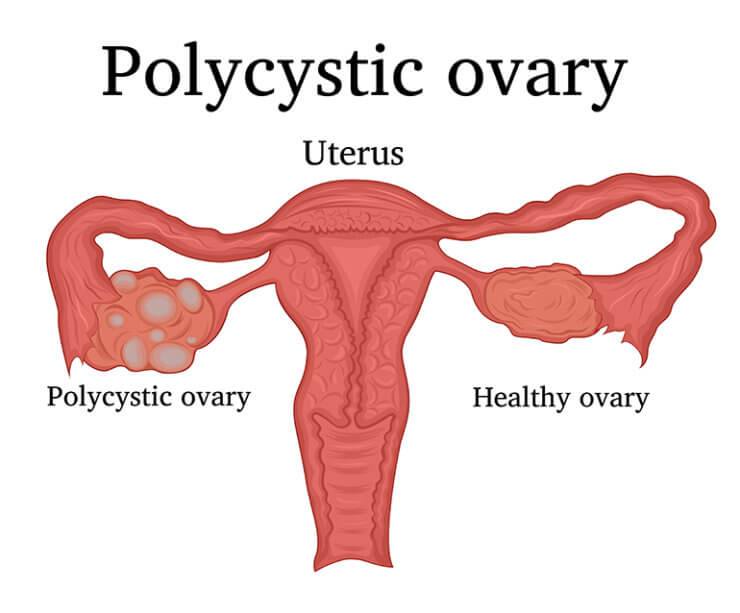
Polycystic Ovarian Syndrome
A systematic review and meta-analysis on the prevalence of PCOS in reproductive-aged women of different ethnicity, published by NCBI in 2017[3], conducted searches in PubMed, The Cochrane Library, EMBASE, CINAHL up to January 2017. The results suggested the lowest prevalence in Chinese women (2003 Rotterdam criterion: 5.6% 95% interval: 4.4–7.3%), and then in an ascending order for  Caucasians  (1990 NIH criterion: 5.5% 95% interval: 4.8–6.3%), Middle Eastern (1990 NIH 6.1% 95% interval: 5.3–7.1%; 2003 Rotterdam 16.0% 95% interval: 13.8–18.6%; 2006 AES 12.6% 95% interval: 11.3–14.2%), and black women (1990 NIH: 6.1% 95% interval: 5.3–7.1%). The results from the above analysis have suggested that, – using the same diagnostic standards -, Chinese women would have the lowest risks of developing PCOS, and then in an ascending order, followed by Caucasian women and women residing in the Middle East, with black women having the highest risk of developing this syndrome. Considering the wide variation in the clinical presentations associated with PCOS among distinct ethnicity, the study postulates a need for the establishment of ethnicity-specific guidelines for this condition. This may help to prevent the under- or over-diagnosis of PCOS.

In daily clinical practice as a gynecologist in Dubai, I see a lot of women affected by PCOS-associated conditions. Some women present with irregular periods, bloated intestines, weight-gain, retention of water, hair loss, or skin problems with increased androgen levels causing hirsutism and acne. Other women are being picked up because they are facing problems to conceive and seek advice for conception counselling in subfertility. Some women are not at all aware of any hormone imbalance and never wondered, how come they have skin pigmentation disorders such as acanthosis nigricans, i.e. dark coloured skin patches related to insulin resistance. Overweight and obesity affects a lot of women with PCOS and they do present a higher prevalence of both impaired glucose tolerance and type 2 diabetes. But also, the normal weight women affected by PCOS do have an underlying insulin resistance in over 60%, an impaired glucose tolerance in over 40% and 10% a predisposition to develop type 2 diabetes in over 10% of the cases. The underlying pathophysiology of PCOS is a divine blend of hyperandrogenism, insulin resistance and other factors causing follicular arrest. Multiple immature antral follicles seen in the transvaginal ultrasound imaging can be observed. The follicular arrest maturation arrest contributes to anovulatory cycles and hence causes irregular menstruations and fertility problems.
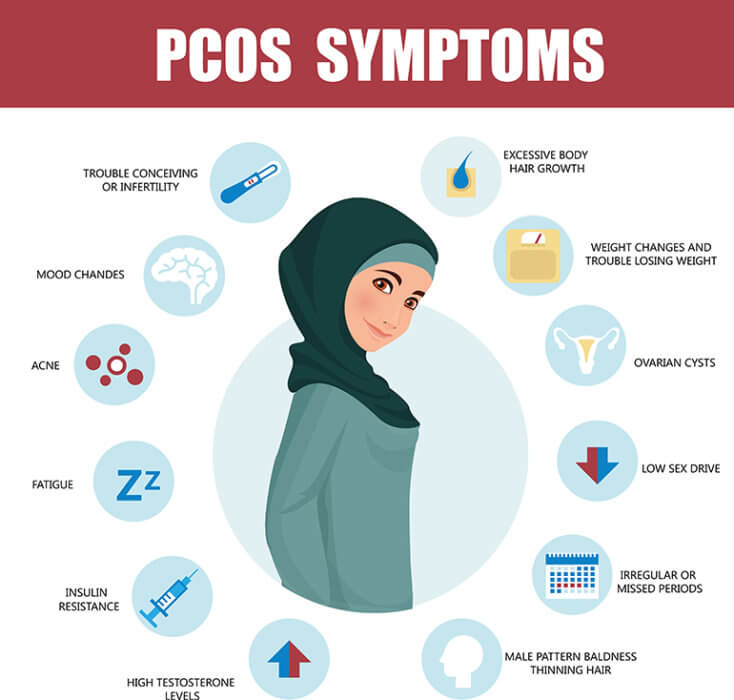
What is Polycystic Ovarian Syndrome (PCOS)
Depending on the individual complaints presented by a woman a wide range of investigations can be offered to evaluate extend and degree of hormonal imbalance, including laboratory tests and ultrasound examinations. Accordingly, depending on the wishes and needs of a patient, the reason for seeking advice is the key to the adequate case-to-case PCOS management. Does a woman wish to conceive and is struggling to fall pregnant? Is an adolescent woman suffering from acne and severe skin problems, but does not think of family planning yet? Is she struggling with weight control and irregular menstrual bleedings?

Lifestyle changes, including nutrition advice, carb-controlled diet, and physical exercise, are the first-line treatment options for adolescent girls and women with PCOS. Pharmacologic treatments including oral contraceptives, insulin sensitizers, prednisone, leuprolide, clomiphene, and spironolactone and others are options to be considered if lifestyle changes fail, which is rarely the case. Nutrients supply (diet) and nutrients utilization, metabolism and physical exercising remain crucial in the management of PCOS. Nutrition education can therefore not be overrated when looking at incidence figures of PCOS anywhere in the world.


Dr. Amelie Hofmann-Werther

Specialist in Obstetrics & Gynaecology
(Facharzt Germany)
Cervical Dysplasia & Coloscopy
Master Class in Fetal Medicine


http://www.fetalmedicine.ae/#dr-amelie

Sunday, August 5, 2018

The cycle of women, the circle of life


Bad hair days, skin problems, feeling heavy, retaining of water in the tissue, rumbling stomach and bloated tummy that will just not fit in the favorite jeans! Most women notice details and experience changes in their hormone balance without knowing that most of our everyday life minor aliment, issues and struggles originate from  women´s hormone imbalance. Sleeping disorders, such as problems in falling asleep, calming down and finding peace before going to bed or problems in sleeping through the night may seem familiar to you. Sleep is restless, and dreams may be fragmented. Digestion disorders vary from slow metabolism and constipation to diarrhea prior to onset of menstrual bleeding.  Phases of keen ravenous appetite being greedy after salts or sweets in the middle of the night or at any other unusual time and occasion may happen as well occasionally, apparently out of the blue! Morning headache, lower back pain or lower abdominal pain in menstrual bleeding are a common finding in women. Putting on weight or just not losing weight although you are strictly sticking to your diet, lumpy breast swellings, sudden discomfort wearing a bra or sleeping on your belly are typical cycle related complaints.


So are mood swings and volatility varying from thin-skinned depression longing for tenderness and a shoulder to lean on to feeling combatively loaded. Sometimes our mind turns inwards, we may be easy to hurt, more likely to quarrel. From feeling desirable to just not interested in romantic quality time with the partner, anything is possible….

You are not alone!
This is a good time for learning new skills. Initiate a change!
Your doctor can help you become more self-aware, so that plans and new goal settings develop easier. Your doctor can help you understand your own individual cycle process and analyze it. Show you how to increase strength, spurt energy, feel balanced, enjoy socializing, feel more light-hearted. By guiding your way determining your personal physical energy and activity peak times as well as your individual lazy leisure time hide aways. Optimization of your Resources should include Nutrition education, Stress-Relief and Detox, physical fitness for more range of motion and flexibility as a holistic approach for hormone balancing.

Dr. Amelie Hofmann-Werther

Specialist in Obstetrics & Gynaecology
(Facharzt Germany)
Cervical Dysplasia & Coloscopy
Master Class in Fetal Medicine

http://www.fetalmedicine.ae/#dr-amelie


Wednesday, June 20, 2018

The Anomaly Scan at 18-22 weeks


An anomaly scan, also known as detailed morphology scan, intends to take a closer look at the baby and the uterus. 

The Fetal Medicine Specialist will check how the baby is developing plus the position of the placenta. 


Anomaly scan is often called a 20-week scan; however, a patient may have it any time between 18 weeks and 22 weeks. 

Although the main target of the scan is as mentioned above, the gender, however, may be revealed by the Fetal Medicine Specialist if desired by the patient.  By 12 weeks gestation, gender accuracy is 95% while at 16 weeks, it is 99%++.


The whole scan takes about 30 minutes for a single gestation.  The Fetal Medicine Specialist will assess the fetal organs.
Major organs are mostly checked by cross section and measured, these are:
·         
    The shape and structure of the head and brain.

·         The Face - Cleft lip and Palate are checked while focusing on the face.


·         The Spine, its length and in cross section, making sure that all the bones            align, and that the skin covers the spine at the back.

·         The Heart. Normal structure, location, normal rhythm pattern.

·         The Abdominal wall making sure it covers all the internal organs at the              front.

·         The Stomach.

·         The Kidneys, confirming that the baby has 2 kidneys and bladder is visible.

·         Fetal Extremities. Arms, Hands, Fingers, Legs, Feet, Toes

The placenta location and structure, umbilical cord and the amniotic fluid are also checked.

To see how well the baby is growing, the HC (head circumference), AC (abdominal circumference) and FL (femur length-thigh bone) measurements should match up depending on when is the expected delivery date.

Authored by Dr. Afshin PourMirza, MD, PhD
Obstetrics and Gynaecology – Maternal Fetal Medicine
Managing Director of Feto Maternal and GenetYX Center


Thursday, May 24, 2018

What to pack in your hospital bag before a C-section delivery


Opting for an elective c-section allows you to have more time to think and prepare what you will need to pack in your hospital bag.  

Instead of being worried and stressed, the best thing o is to ensure being prepared as you can be – and one of the things you may focus on is what to pack in your  hospital bag.

Being prepared can make all the difference to make certain your pre and post delivery experience is as smooth as possible.


Below are the top items to pack;

For mother:
  • ·         A favorite pillow:  Or my "comfort" pillow
  • ·         A few sets of Socks/a Cozy Blanket -  hospitals are known to be notoriously cold
  • ·         A Compression binder – this can help to support the stomach muscles after surgery. These are also great to wear in the weeks following, though you may want to check this with your Physician!
  • ·         Several disposable underwear (Vaginal bleeding is expected even after a c-section and disposable underwear means less fuss and more time to concentrate on your new little person).  
  • ·         Slippers/flip flops – something easy to get on and off your feet.
  • ·         Mobile phone – you're going to want to take lots of photos and send them to your loved ones back home
  • ·         Toiletries (the usual - wash goods, toothbrush, hair brush etc)
  • ·         x4 Loose long dresses
  • ·         A bathrobe
  • ·         Towels
  • ·         A going home outfit – we recommend loose drawstring pants, a maternity bra, underwear and a loose shirt
  • ·         Of course, don’t forget all your paperwork - photo ID, insurance card, medical papers/ antenatal reports etc. A file folder with  everything neatly in a clear folder to ensure everything was kept together and organized.
  • ·         Other things you may wish to pack include; books, photographs of loved ones, magazines; portable devises (not forgetting their chargers/ power banks).

For your baby;

  • ·         x4 receiving blankets
  • ·         x4 sets baby clothes for the duration of the hospital stay – I brought stretchy onesies with snaps in front for easy diaper changes
  • ·         A going home outfit ( a onesie and if his/her feet are exposed, be sure to bring a pair of socks or soft booties. I’d also recommend a soft hat – as babies can really feel the cold in their first few days).
  • ·         A baby carrier (I’d recommend one which also serves as a car seat for the journey home)


Myleen R. Camama-Cerilla
Administrative Manager
Marketing Incharged
Feto Maternal and GenetYX Center