Wednesday, August 7, 2019

Truffle Hunting: It’s all about the right chemistry! Or – metaphorically speaking, “love is in the air.”

Truffle Hunting: It’s all about the right chemistry! Or – metaphorically speaking, “love is in the air.”


Although I don’t believe in bottled aphrodisiacs – except maybe Veuve Cliquot – I have to admit something seems to be quite real about the “right chemistry”. Whether it is the first flicker of attraction only, or sparks flying between two people, I bet that when you are in that moment, you are not worrying about the chemistry of desire. And that makes perfect sense!
Nearly 150 years ago, Charles Darwin postulated the existence of chemical signals involved in the control of sexual behaviors. These signals fulfill fundamental roles in enabling identification of the perfect mating partner of the opposite sex, the appropriate species and of maximum satisfaction.
Chemistry of LovePheromones are subconsciously released odor signals, micro particles to attract and encourage the opposite sex to mate with us. These odors function as a primer, leading to attraction and promoting the desire for copulation. In the last decade pheromones and their receptors were closer investigated and identified, allowing visualization and manipulation of the neural circuits that link these sensory signals with particular human behaviors. Mapping of the neural circuitry responsible for converting the detection of a single chemical cue into a specific sexual behavior seems to be an ongoing exciting, challenging scientific goal.
Our immune system genes imbue each of us with a very unique “odor-print” like a fingerprint. We experience smell through a series of specialized proteins known as chemo-sensoric odor receptors. Although we normally associate these receptors with the nose, we actually rather “sense” pheromones. A healthy body presents these smell detecting receptors in many areas of the body. In fact, the female and male pelvic organs are equipped with thousands of such receptors. How much these are alerted or vigilant varies on the pheromone signals they receive and how responsive the sensors are developed and imprinted.
Interestingly, there is enormous diversity in the chemical nature of our pheromones and their impact. Women are more selective when deciding to mate and delicately distinguish if chemo-sensory meta-communication ensures that they find a high-quality mate that satisfies their reproductive and erotic needs. Female pheromones typically comprise a divine blend of chemicals rather than just a single pheromone. A unique identity is conferred by varying minor components of the blend or by varying the ratio between the components. There are pheromones that are secreted into the vagina at optimum ratios during lubrication with the aim of encouraging men to desire to copulate and climax. This group of pheromones can remarkably increase testosterone levels in men, causing feelings of arousal in men if a woman with this “pheromone-cocktail” is present.


Androstenol hormone
Androstenol hormone

Androstenol-containing pheromones increase chattiness and friendliness from both sexes and can increase sexual attractiveness as well. Therefore it has been referred to as an “ice-breaker” pheromone. Pheromones with a higher ratio of androstenol or its isomers are more masculine. Those pheromones are more dominant and create an aura of safety, protection, and reliability associated with more charismatic alpha males.
Funny enough, androstanol, and its derivatives are found in truffles. This was discussed as an explanation for how pigs locate them deep in the ground.
Men instinctively coordinate their release of sperms using pheromones. And coordination is very important because sperms are diluted easily and are short-lived. An effective pheromone push therefore provides a selective advantage in terms of reproductive performance. Some studies provide evidence that human steroids meta-communication differs in effectiveness, depending on the sender-recipient resonance, demonstrating that our visual gender perception draws on subconscious chemo-sensory biological cues, an effect that has huge impact on our subconscious sexual behaviour and readyness.Pheromones are catalysts and primers. As we secrete these chemicals through perspiration, they are subconsciously “sensed“ by the nose, brain, and nervous system. They are powerful signals of attraction or what we call “sex appeal”.
Most important pheromone receptors seem to
exist in sperm cells. Certain chemo-sensory receptors found in sperm cells respond to a floral compound, a smell we associate with flowers. The presence of floral scent detectors in sperms seem to help them navigate towards an egg. Sperms are motile cells that move via the presence of a ‘tail’. Sperm cell movement is directed towards areas of high concentrations of certain floral scents. Therefore eggs do not wait passively for the sperm to arrive but in fact produce floral chemicals that in turn attract the sperm to them, meaning that female reproductive cells have the capacity to produce chemical attractants, which increase the probability of successful fertilization. Interestingly, the ability for sperm cells to “smell“ also physically spurts their swimming/progressive forward motility rather than going in loops.
Evidently, the complex cloud of aromas we emit needs a lot more parsing before science closes the book on pheromones since pheromones don’t evoke innate stereotyped sexual behaviors. There is substantial plasticity in pheromone blends and the responses they evoke to provide greater nuance. Fascinatingly, this close relationship has led to pheromones being co-opted for several other non-sexual functions as well, such as guiding humans to suitable food sources, promoting recovering sleep, a strong immune system, and mental well being.

Conclusions:

It’s all about the right chemistry. Or – metaphorically spoken –“love is in the air“.
Life is Darwinism – Survival of the fittest! Some of us just seem to have “magic bullets“ in their body odor. Sometimes it just clicks. Next time you have a nose-jerk reaction because you just walked past someone smelling “Oh so good”, it could be the perfume this person is wearing – or it might just be your perfect pheromone-cocktail match!
Let’s sniff it out! Are you equipped for the great truffle hunt?


Dr. Amelie Hofmann-Werther

Specialist in Obstetrics & Gynaecology
(Facharzt Germany)
Cervical Dysplasia & Coloscopy
Master Class in Fetal Medicine        

Thursday, April 11, 2019

Intellectual Disability


What is the difference between mental retardation and intellectual DISABILITY? 

Intellectual disability is the new term that replaced mental retardation in the recent years.

What is intellectual disability?

It means marked impairment in intellectual functions (understanding, and proper response) and adaptive behavior. 

What is developmental DISABILITY?

It can be considered as an early sign of intellectual disability in infant and early childhood. It is manifested by marked delay in more than two developmental milestones such as holding head, grasping, sitting up, crawling, walking, speaking, and so on, in the absence of any apparent cause. It should not be confused with simple lagging. You have to consult your pediatrician if you have any doubt.

What are the different causes of intellectual disability?

Prenatal Causes

Fetal alcohol syndrome, exposure to toxins during pregnancy, and some maternal infections.
Some genetic diseases such as Down syndrome, Fragile X, metabolic diseases.

Perinatal causes

Fetal hypoxia during delivery, brain trauma and extreme preterm.

Postnatal causes

Brain trauma, brain hemorrhage, meningitis and encephalitis, uncontrolled severe convulsions, some metabolic diseases and toxins.

How to manage intellectual disability

  • Diagnose
  • Search for the cause
  • Proper and adapted care for the affected child according to the cause
  • Prevent recurrence through genetic counselling

Dr. Azza Abd El Moneim Attia Mohamed
French Board
Consultant Clinical Genetics
  

Thursday, March 7, 2019

Genetic effects of consanguineous marriages

Consanguineous marriages - It is a marriage of biologically (blood) related persons, they can be 1st degree, 2nd degree or 3 degree cousins. 
Advantages:

  • Early marriage
  • More stable marriage
  • More children
  • More convenient for parents
  • More or less equivalent socioeconomic and cultural background in the couple

Genetic effects - As both parents share more or less similar genetic information, there is increased risk for transmission of autosomal recessive diseases. Of course 1st degree cousins have more empirical risks than 2nd or 3rd degree cousins.


What is an autosomal recessive (AR) disease?

It is a genetic inherited disease transmitted from two completely healthy parents, each of them carrier of a defect in one copy of his gene. When both abnormal gene copies are transmitted to the offspring, the disease starts to appear.
The risk of this couple to have an affected child is 25% or ¼ and it is the same risk for each pregnancy.
Examples of these diseases are thalassemia, sickle cell anemia, most of metabolic diseases, some mental retardation, some neurological or neuromuscular diseases, familial Mediterranean fever, and cystic fibrosis.

How to avoid appearance of autosomal recessive DISEASES in my family?

Genetic screening whether premarital or preconception to detect the carrier status of the parents and to avoid conception of an affected offspring by genetic analysis.

However, if pregnancy occurs, we can also do early prenatal diagnosis as early as 12 weeks of gestation but the genetic status of the parents should be determined early before 12 weeks of gestation to allow prenatal or pre-conception diagnosis. 


How to know that we have an autosomal recessive disease in my family?


By recurrence of the same clinical manifestations in more than one offspring derived from consanguineous parents. However, you should not wait for that to do genetic screening for your couple if you are consanguineous parents.
To be noted that consanguineous marriage is common in North Africa, East Asia, and middle east.


Dr. Azza Abd El Moneim Attia Mohamed
French Board
Consultant Clinical Genetics
 

Thursday, January 10, 2019

NIPT – Non Invasive Prenatal Test


NIPT – Non Invasive Prenatal Test

NIPT is a Non-Invasive Prenatal Test (NIPT) performed on maternal blood to screen pregnancies for the most common fetal chromosome anomalies: trisomy 21 (Down syndrome), trisomy 18 (Edwards syndrome), trisomy 13 (Patau syndrome) and sex chromosome abnormalities. It can also screen for some common microdeletions syndromes and triploidy.

Who should consider having NIPT?

1.    NIPT can be performed in all pregnancies without specific indication as it has a higher sensitivity than combined screening done by fetal NT scan and biochemical double marker test.
2.    Early gender detection for medical reasons or according to the request of the parents.
3.    Intermediate risk detected by first trimester combined screening.
4.    High risk detected by first trimester combined screening if the couple decline invasive test. However, invasive test is the most appropriate test to be done in such condition.
5.    Advanced maternal age above 35 years old as we require more sensitive test with increased risk for chromosomal anomalies caused by advanced maternal age
6.    Some soft tissue marker anomalies detected in the morphology scan.
7.    In case of high risk screening detected by triple or quadruple marker test in the second trimester.
8.    Anxious mother or parents.
9.    Twin pregnancy to detect the zygosity and risk for major common chromosomal anomalies or common microdeletions syndromes concerning this pregnancy as well as fetal gender(s).
1. History of previous pregnancy with accidental (de novo) chromosomal anomaly.

What is the detection rate for NIPT?
Most NIPT tests have a >99% detection rate for Down syndrome and a false positive rate below 1%. Its sensitivity for other common chromosomal anomalies or common microdeletions range from 95-99%

How early in my pregnancy can I have NIPT?
Most NIPT companies provide the test from 9-10 weeks gestation. An ultrasound scan must confirm the gestation prior to the test.

How long until I get a result?
NIPT takes around 10 working days from sample collection to receiving the report.

Does NIPT replace the need for my nuchal translucency (NT) scan at 12 weeks or morphology scan at 21 weeks?
Definitely not. The NT scan is important for assessing physical anomalies as well as providing a screening assessment for trisomy 13, 18 & 21. The morphology scan is a detailed organ scan which is mandatory at 21 weeks.

What does NIPT involve?
A blood sample from the mother and a brief consultation with our genetic counselor who can answer all your questions.

Can I have NIPT with an IVF or twin pregnancy?
At least one of the NIPT companies can offer this test for twins and IVF pregnancies.

When is NIPT not advised?
When there are fetal major anomalies on the ultrasound or when there are known genetic conditions that cannot be diagnosed by NIPT. Invasive prenatal test is the recommended test in this condition.
In case of vanishing twin or empty gestational sac as NIPT will have a higher rate of false positive results.

Will I find out the sex of my baby with NIPT?
NIPT will report on the gender of your baby if you request this service. There is no extra cost.

Follow up procedure after NIPT
1.    Normal NIPT result – no specific follow up is necessary however if an ultrasound examination of the fetus reveals anomalies then further testing might be recommended.

2.    In case of a test failure – in a small number of pregnancies (<4%) not enough fetal DNA can be extracted from the maternal blood, and NIPT cannot be performed. A repeat sample may be requested at no extra cost.

3.    Abnormal NIPT result – A consultation with our genetic counselor is recommended to discuss the implications of the chromosomal abnormality with the patient. Due to the possibility of a false positive result we recommend confirming a positive result with invasive testing (CVS or amniocentesis).


Dr. Azza Abd El Moneim Attia Mohamed

French Board


Consultant Clinical Genetics


Friday, December 21, 2018

Pelvic Floor Weakness


Pelvic floor laxity occurs when the pelvic floor muscles, supporting tissue and ligaments stretch and weaken and no longer provide adequate support to hold the pelvic organs in place, in particular in certain physical exercises. Pelvic floor weakness can affect women of any age. But it often affects women who've had one or more vaginal deliveries.

Possible symptoms of pelvic floor weakness include

  • Sensation of something pulling down in your lower abdomen
  • Urinary problems, such as accidental urine leakage in coughing, sneezing or laughing
  • Voiding difficulties with retention of residual urine after micturition or post-micturation dribble
  • Overactive bladder symptoms with a strong urge to go
  • Increased number of trips to the bathroom and voiding at night (nocturia)
  • Problems to empty the bladder in one go or interrupted flow (staccato-voiding)
  • Constipation and trouble having a bowel movements
Some of the most common reasons for weakened pelvic muscles and tissues include:  
  • Pregnancy and childbirth
  • Prolonged labour and birth trauma
  • Tearing in childbirth
  • Previous history of pelvic surgeries
  • Delivery of a large baby or twins
  • Obesity and a high BMI
  • Chronic increase of intra-abdominal pressure by repeated heavy lifting, asthma or chronic coughing, severe obstipation with trouble having bowel movements


Simple ways to strengthen the pelvic floor:

Exercise regularly and target the pelvic floor muscles. You can try Yoga, Pilates, swimming and targeted physiotherapy focusing on these muscles, especially after you had a baby. Physiotherapy of the pelvic floor can help to correct posture, stretch & relax tight muscles and strengthen weaker muscle groups. It can help increase endurance, fine coordination and tones of the muscles for better bladder control, tightening and lifting of the pelvic floor. Pelvic floor physiotherapy can include biofeedback, kegel exercises, electrical stimulation and bladder education - just as needed.

Try to prevent from constipation by drinking plenty of fluids and eat a healthy diet with high-fiber foods to maintain bowel movements. Eat between 35 – 55 grams a day. You can get them through your vegetables, grains like white rice, or brown rice, or wild rice. And clean your ecosystem with
natural probiotics. Examples of foods that act as prebiotics are leeks, asparagus, beans, legumes, banana, garlic, sweet potatoes, squash, and onion. You don’t need all of these every day. Just rotate through a wide diversity of vegetables, legumes and some fruits.

Avoid heavy lifting and when lifting, use your legs instead of your waist or back.

Control coughing, get treatment for a chronic cough or bronchitis, reduce exposure to allergens, dust and quit smoking. An air purifier in your bedroom can help with better sleep at night without coughing and helps regulate air humidity.

Find out your ideal and implement weight-loss strategies

To find out what will work best for you, visit us and get a pelvic examination including dynamic pelvic ultrasound.


Dr. Amelie Hofmann-Werther


Specialist in Obstetrics & Gynaecology
(Facharzt Germany)
Cervical Dysplasia & Coloscopy


Master Class in Fetal Medicine  


Thursday, October 25, 2018

Palpable Breast Findings


Palpable Breast Findings

Newly recognized lumps and nodules in the breast are a reasonable cause for many women to be highly alerted. Self-detected, when showering or applying body lotion, lumps and nodules, as well as painful swellings in the breast give rise to concerns, especially when being abroad, not in your home town community and not knowing where to address your concerns to…
Good to know, that in fact most of the findings in women’s breast are of benign, meaning non-malignant, non-cancer origin. They may show up according to menstrual cycle, predominantly prior to onset of menstrual bleeding, while bleeding or mid-cycle near ovulation time.
All of a sudden, bra holders put pressure to your chest and sleeping on your belly is uncomfortable…

Now, Rule No.1 is applying: Keep calm!
What’s common, is common! And what’s rare, is rare!

And  90 % of all detected breast findings are benign, meaning non cancerous.
Nevertheless, uncertain suspicious findings all need to be thoroughly looked at.
The most common findings in a women’s breast are listed below as a brief overview

•      Structural changes of breast tissue density = Mastopathia
•      Pain & Tenderness = Mastalgia
•      Rtention of fluid = Cyste
•      Changes in duct system & glands = Papilloma
•      Benign solid nodule = Fibroma
•      Acute infammation = Mastitis

Mastopathia
This term refers to benign, meaning non-malignant structural changes in the breast tissue, that is composed of glandular tissue, fatty tissue and fibroid tissue. Changes are due to hormone imbalance. Cysts and lumpy glandular areas may occur, combined with feeling of tension and tenderness of the breast.

Mastalgia
Pain and tenderness mostly enhanced in the second half of menstrual cycle close to bleeding time. The breasts may feel heavy, sensible, tense and firm or lumpy. Since the breast tissue reacts very sensible to hormonal changes, complaints occur more often in irregular cycles and in women with bleeding disorders.

Cysts
cyst is a non-malignant fluid filled dilated area of a glandular duct in the breast. It is an important entity since it can cause irritating focal pain and discomfort or cause anxiety when being palpated by a woman herself as a suspicious nodule. To detect a cyst in the breast, an ultrasound examination is the assessment of first choice.

Fibroadenoma
A fibroadenoma is the most common finding amongst benign nodules in the breast. It most commonly affects young women as a solitary finding. Only 7% of patients present several fibromas. Typical criteria in ultrasound is their round to oval shape with smooth surface and clear margins. The fibroadenoma is a benign solid mass that only in very rare cases (0,1 – 0,3 %) may include cancer precursor cells (Carcinoma in situ).

Papilloma
A rather rare entity with 1 - 1,5% of all findings that is located intra-ductal.80% of all Papilloma show secretion of fluid from the nipple. In case of blood stained secretion, further investigations need to be performed by a radiologist using contrast to visualize a glandular duct extension in the breast.

Abscess & Mastitis
An acute inflammation of the breast most commonly is seen in breast feeding women consulting a doctor due to acute pain, swelling, rash and maybe fever. In the the lactating breast, inflammation occurs as a result of bacteria invasion. Tiny scars in the sore nipple area allow bacteria to affect underlaying tissue and cause infection spreading along the lactation ducts of the breast.

Please note:
In case of a positive family history regarding malignant cancerous or pre-cancerous diseases in close relatives, normal check up visits with your doctor should be adjusted in frequency and intensity.

Screening-Guidelines for breast ultrasound and Mammogram for patient without pre-dispositioning high risk constellation recommend examination of the breast starting with the age of 40 and above.


Dr. Amelie Hofmann-Werther


Specialist in Obstetrics & Gynaecology
(Facharzt Germany)
Cervical Dysplasia & Coloscopy

Master Class in Fetal Medicine                             

Sunday, October 14, 2018

Polycystic Ovarian Syndrome (PCOS): A lifestyle-related Problem?


Polycystic Ovarian Syndrome (PCOS) is one of the most common female endocrine disorders in the Middle East. PCOS is a heterogeneous combination of signs and symptoms of impaired glucose-insulin-homeostasis, androgen excess, and ovarian dysfunction due to epigenetic and environmental influences, including diet, and lifestyle factors.
“Is your lifestyle making you infertile?” is an often raised question[1] linking PCOS to insulin resistance and diabetes, a lifestyle condition the Middle East suffers from in almost epidemic proportions. The relationship between PCOS and insulin resistance seems obvious in the UAE where one in five of the female population suffer from type 2 diabetes and other metabolic syndromes. The prevalence of PCOS has been investigated in many studies in many continents. A particularly high incidence of PCOS in the Middle East/GCC with approximately 20-25% of women may be due to hereditary and ethnic influences as well as due to certain lifestyle related conditions. Some researches assume that cases can reach up to 30% or even higher in the sub fertile population group in the region[2].

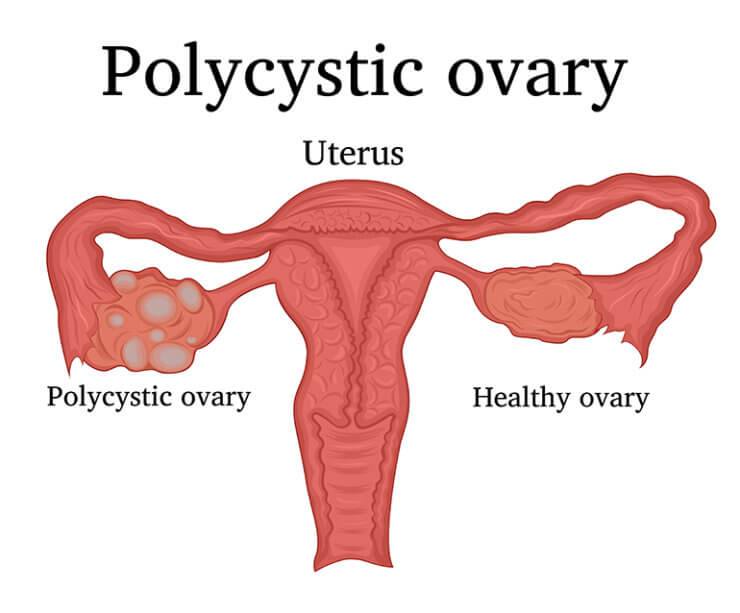
Polycystic Ovarian Syndrome
A systematic review and meta-analysis on the prevalence of PCOS in reproductive-aged women of different ethnicity, published by NCBI in 2017[3], conducted searches in PubMed, The Cochrane Library, EMBASE, CINAHL up to January 2017. The results suggested the lowest prevalence in Chinese women (2003 Rotterdam criterion: 5.6% 95% interval: 4.4–7.3%), and then in an ascending order for  Caucasians  (1990 NIH criterion: 5.5% 95% interval: 4.8–6.3%), Middle Eastern (1990 NIH 6.1% 95% interval: 5.3–7.1%; 2003 Rotterdam 16.0% 95% interval: 13.8–18.6%; 2006 AES 12.6% 95% interval: 11.3–14.2%), and black women (1990 NIH: 6.1% 95% interval: 5.3–7.1%). The results from the above analysis have suggested that, – using the same diagnostic standards -, Chinese women would have the lowest risks of developing PCOS, and then in an ascending order, followed by Caucasian women and women residing in the Middle East, with black women having the highest risk of developing this syndrome. Considering the wide variation in the clinical presentations associated with PCOS among distinct ethnicity, the study postulates a need for the establishment of ethnicity-specific guidelines for this condition. This may help to prevent the under- or over-diagnosis of PCOS.

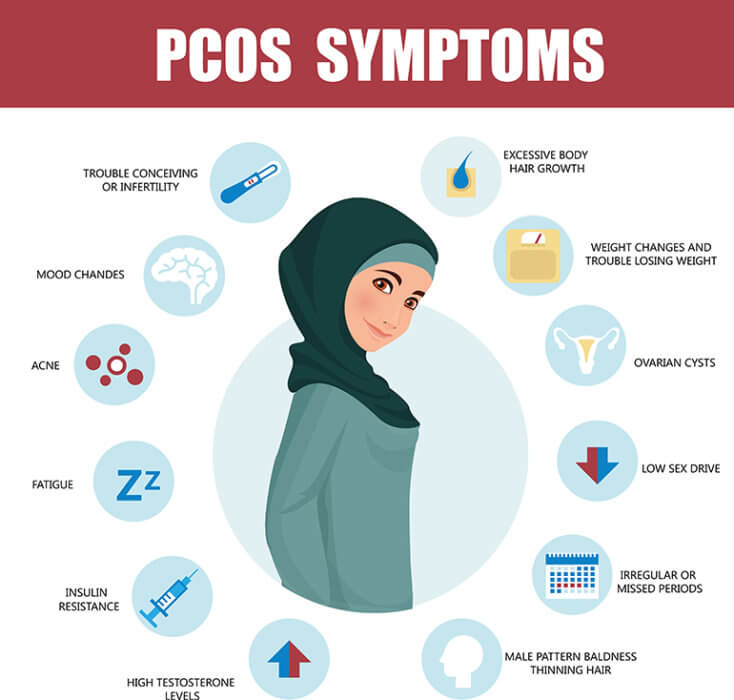
In daily clinical practice as a gynecologist in Dubai, I see a lot of women affected by PCOS-associated conditions. Some women present with irregular periods, bloated intestines, weight-gain, retention of water, hair loss, or skin problems with increased androgen levels causing hirsutism and acne. Other women are being picked up because they are facing problems to conceive and seek advice for conception counselling in subfertility. Some women are not at all aware of any hormone imbalance and never wondered, how come they have skin pigmentation disorders such as acanthosis nigricans, i.e. dark coloured skin patches related to insulin resistance. Overweight and obesity affects a lot of women with PCOS and they do present a higher prevalence of both impaired glucose tolerance and type 2 diabetes. But also, the normal weight women affected by PCOS do have an underlying insulin resistance in over 60%, an impaired glucose tolerance in over 40% and 10% a predisposition to develop type 2 diabetes in over 10% of the cases. The underlying pathophysiology of PCOS is a divine blend of hyperandrogenism, insulin resistance and other factors causing follicular arrest. Multiple immature antral follicles seen in the transvaginal ultrasound imaging can be observed. The follicular arrest maturation arrest contributes to anovulatory cycles and hence causes irregular menstruations and fertility problems.

What is Polycystic Ovarian Syndrome (PCOS)
Depending on the individual complaints presented by a woman a wide range of investigations can be offered to evaluate extend and degree of hormonal imbalance, including laboratory tests and ultrasound examinations. Accordingly, depending on the wishes and needs of a patient, the reason for seeking advice is the key to the adequate case-to-case PCOS management. Does a woman wish to conceive and is struggling to fall pregnant? Is an adolescent woman suffering from acne and severe skin problems, but does not think of family planning yet? Is she struggling with weight control and irregular menstrual bleedings?

Lifestyle changes, including nutrition advice, carb-controlled diet, and physical exercise, are the first-line treatment options for adolescent girls and women with PCOS. Pharmacologic treatments including oral contraceptives, insulin sensitizers, prednisone, leuprolide, clomiphene, and spironolactone and others are options to be considered if lifestyle changes fail, which is rarely the case. Nutrients supply (diet) and nutrients utilization, metabolism and physical exercising remain crucial in the management of PCOS. Nutrition education can therefore not be overrated when looking at incidence figures of PCOS anywhere in the world.


Dr. Amelie Hofmann-Werther

Specialist in Obstetrics & Gynaecology
(Facharzt Germany)
Cervical Dysplasia & Coloscopy
Master Class in Fetal Medicine


http://www.fetalmedicine.ae/#dr-amelie